Removal of Marine Invasive Species
Removal of Marine Invasive Species
In 2023, a study entitled “Study on Management Possibilities for Selected Marine Non-Indigenous Species Established in Maltese Waters” was conducted by the University of Malta, as commissioned by the Environment and Resources Authority (ERA).
The study identified several non-indigenous species present in Maltese waters and applied a risk assessment matrix to evaluate appropriate management responses. This approach recognised that the removal of certain NIS may, in some cases, lead to unintended ecological consequences, such as further proliferation. As such, a range of management options was assessed, including physical removal, encouragement of utilisation, a do-nothing scenario, and the identification of a recommended course of action for each species.
In order to avoid overlap with the Fisheries Directorate, Ambjent Malta will primarily focus on the removal of sessile (non-mobile) species. Species of particular interest include Oculina patagonica and Brachidontes pharaonis, amongst others. The workflow for each non-indigenous species (NIS) will involve the implementation of pilot studies to test and evaluate removal methods, which may subsequently be scaled up for broader application.
Oculina patagonica
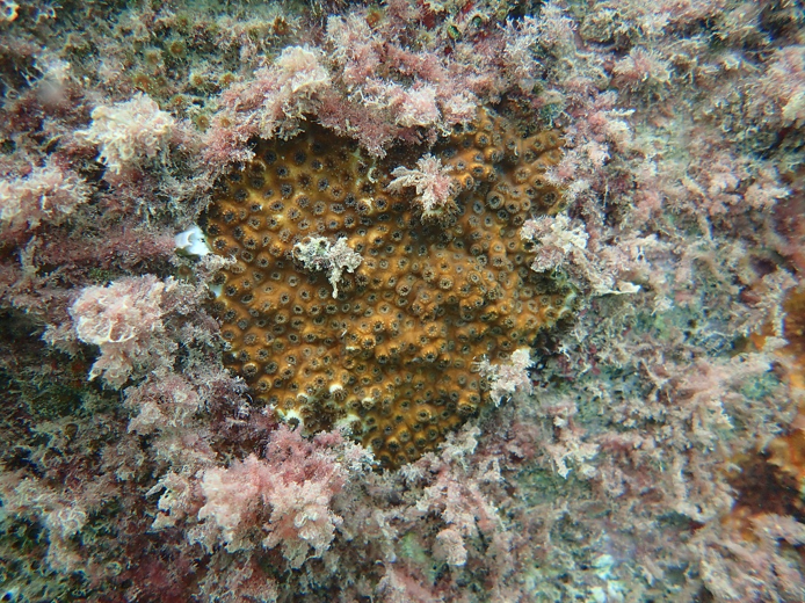
As part of its remit of habitat restoration and marine conservation, Ambjent Malta is supporting initiatives aimed at controlling non-indigenous species (NIS) that threaten Malta’s marine ecosystems, in line with the EU Biodiversity Strategy and the Nature Restoration law. One such initiative focuses on the coral species Oculina patagonica, first recorded in Maltese waters in 2017 and now spreading across several coastal sites.
This opportunistic coral species competes aggressively with native marine organisms, contributing to the degradation of local benthic habitats through spatial competition and displacement of indigenous species. Following its identification by the Environment & Resources Authority as a species requiring targeted containment measures, a pilot restoration project was undertaken at Marsaxlokk to assess effective removal techniques.
The project evaluated two intervention methods: manual removal of coral colonies and smothering using biodegradable jute matting. Results showed that manual removal was the most effective method when all coral material was carefully eliminated, while the jute matting approach achieved limited success due to material degradation over time. The study also highlighted the importance of ongoing monitoring and repeated interventions, as cleared areas remain vulnerable to recolonisation. These findings contribute towards future marine habitat restoration efforts and support Malta’s broader biodiversity conservation objectives.
Brachidontes pharaonis
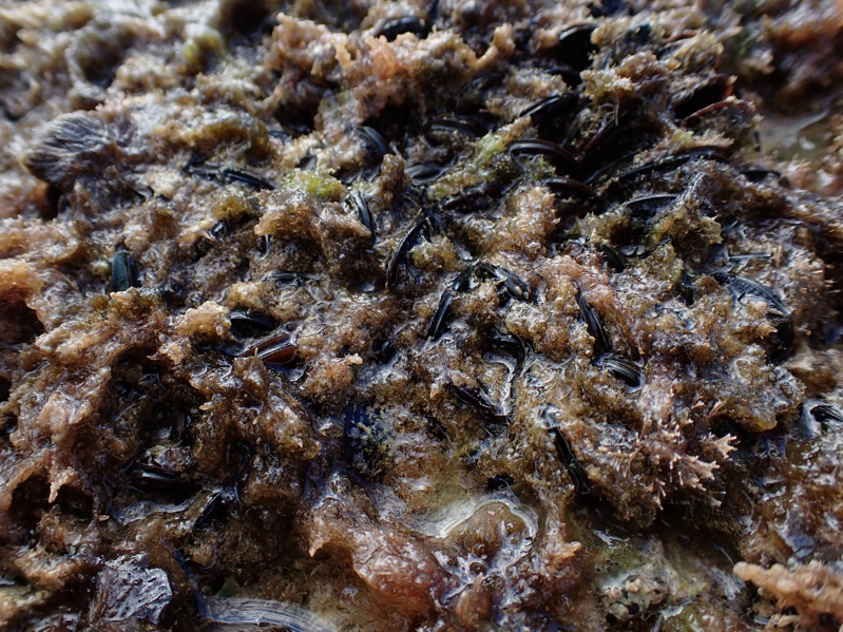
As part of its ongoing commitment to marine habitat restoration and the control of non-indigenous species, Ambjent Malta is implementing another pilot project targeting Brachidontes pharaonis, an invasive bivalve species commonly found in the Mediterranean Sea. Originally believed to have migrated from the Red Sea following the opening of the Suez Canal in 1869, this species is considered one of the earliest Lessepsian migrants recorded in the Mediterranean region.
Brachidontes pharaonis is a small bivalve that can grow up to 4-5 cm in length. It is typically found attached to rocky substrates and artificial coastal structures within the intertidal zone, where it forms dense colonies that can alter native marine habitats and compete with indigenous species. Its ability to tolerate varying environmental conditions has contributed to its successful spread across Mediterranean coastal areas.
In response to the increasing presence of this invasive species in Maltese waters, Ambjent Malta has launched a pilot restoration initiative involving the manual removal of Brachidontes pharaonis colonies from selected sites in Birżebbuġa. The pilot project aims to assess the effectiveness of physical removal as a control measure to reduce the spread and ecological impact of the species while contributing valuable information for future habitat restoration and biodiversity conservation efforts in Malta’s Marine Protected Areas.